SΫS has become a nickname for persons who develop an embodied consciousness of interdependencies, precious equilibria and fragile beauty of all life. In other words: SΫS characters evolve an embodied systems awareness. It is also an acronym and stands for Sense Your Senses – also to understand the systems that are relevant to one's own life – to Sense Your Systems.
SΫS SPACE is the SENSING LIVING SYSTEMS' multisensory scenography. The SΫS SPACE facilitates a physical experience of one's own embeddedness within living systems, within complex interrelationships – within a greater whole. It paves the way for relational sensing and thinking – the development of an embodied systems awareness, that can help in coping with complexity, challenges, and uncertainties, and in making good decisions towards sustainable futures. SΫS SPACE deliberately reduces the dominance of the sense of sight, placing the emphasis instead on smell, touch, and hearing.
SΫS SPACE is the SENSING LIVING SYSTEMS' multisensory scenography. The SΫS SPACE facilitates a physical experience of one's own embeddedness within living systems, within complex interrelationships – within a greater whole. It paves the way for relational sensing and thinking – the development of an embodied systems awareness, that can help in coping with complexity, challenges, and uncertainties, and in making good decisions towards sustainable futures. SΫS SPACE deliberately reduces the dominance of the sense of sight, placing the emphasis instead on smell, touch, and hearing.
SENSING WORKSHOP
CONCEPTION OF SŸS
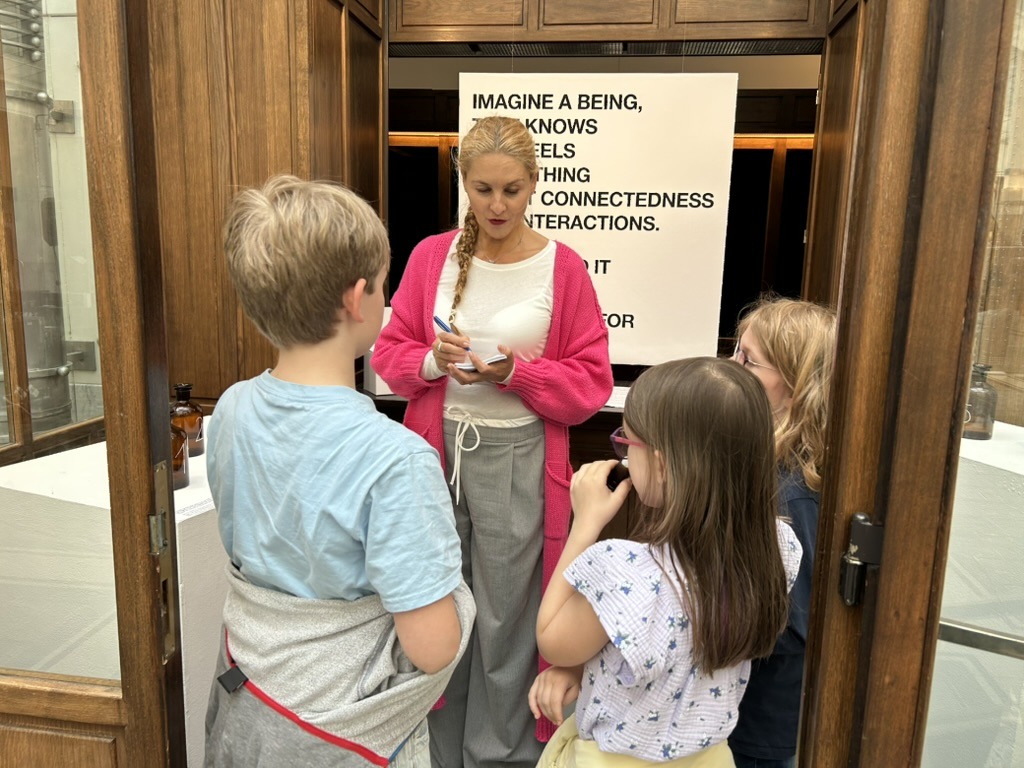
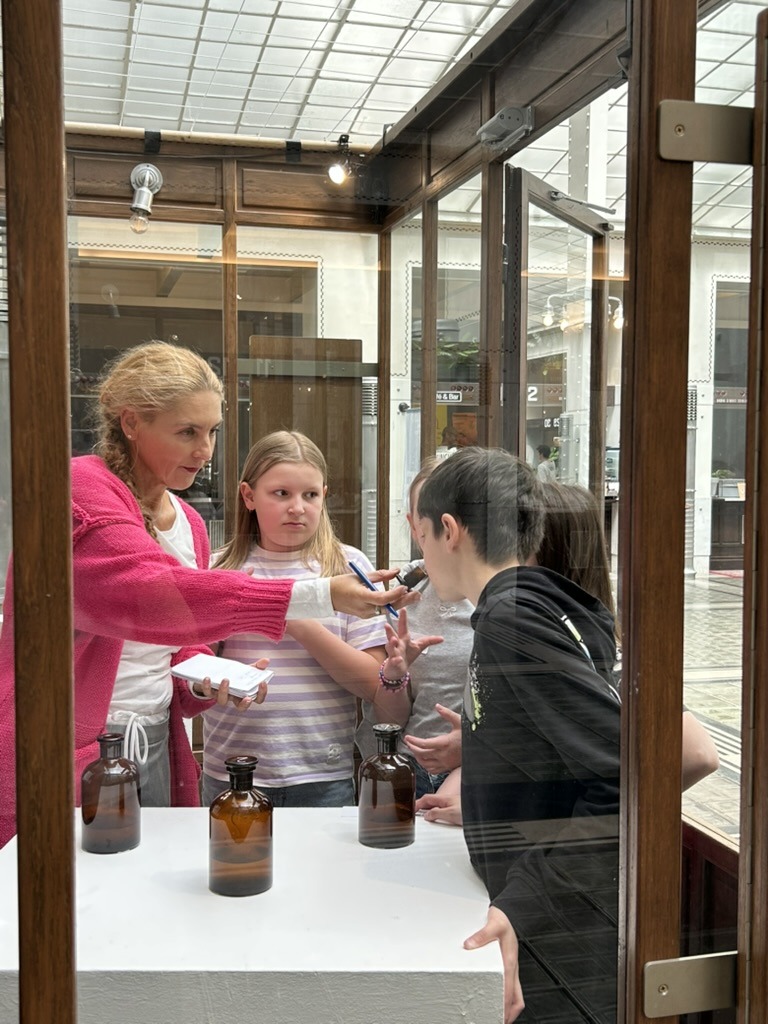
In May 2025, a 4th-grade class (ages 9–11) visited the AIL Art Cabin in Vienna for a three-hour Sensing Workshop. The goal was to offer a playful and low-threshold introduction to science and artistic research by activating the senses and encouraging imagination.
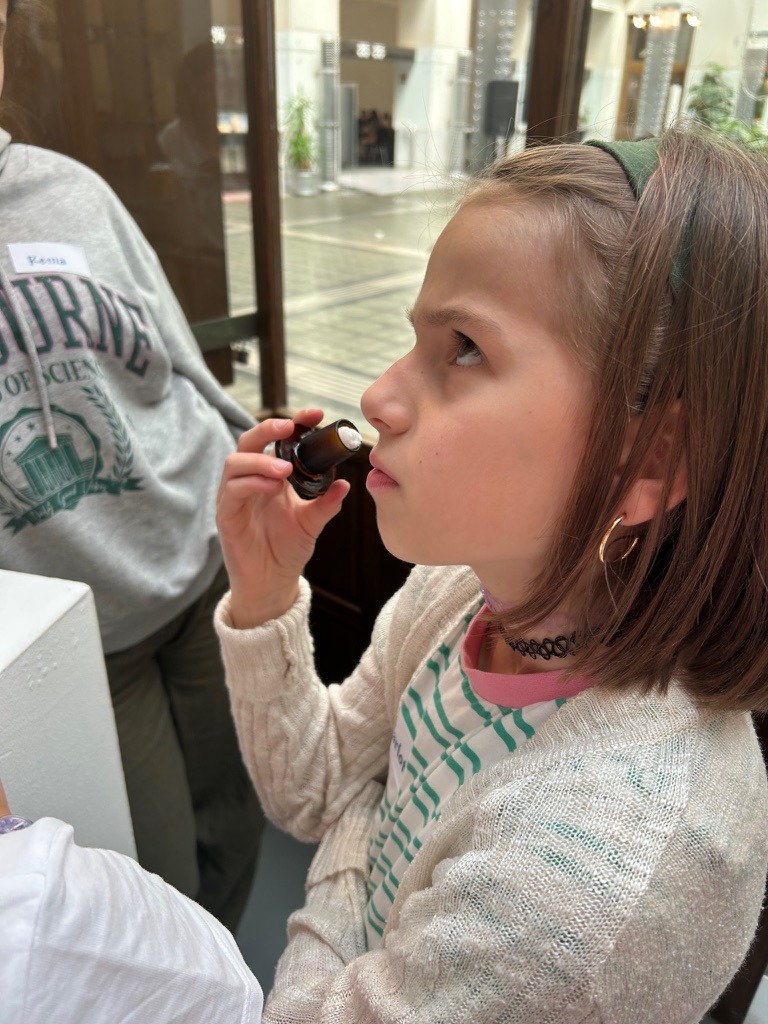
In small groups, the students explored the multisensory installation CONCEPTION OF SŸS: The Smell of a Mythological Being. They smelled six scents composed by MUELLER-DIVJAK, and were asked to choose the one that fits to a being who knows and feels everything about connectedness and interactions. The children shared their associations, which included everyday references like chewing gum, fruit, spring air, or memories of loved ones. Their votes for the most fitting scent were collected and compared to the overall project results.
While one group engaged with the installation, others were invited to draw what they imagined a SŸS-being could look like. These creative interpretations were later shared in a group presentation, where students explained their thoughts and stories.
From the beginning, the SENSING LIVING SYSTEMS team made clear that there are no right or wrong answers. Every perception matters. This created a relaxed, open atmosphere where the children could focus, explore, and express themselves freely.
The workshop also introduced basic elements of voting, participation, and critical thinking – showing how even young voices can contribute to shared inquiry. Teachers noted how seriously and enthusiastically the children engaged with the experience.
SENSING WORKSHOPS
These sensory workshops, developed by MUELLER-DIVJAK, invite participants of all ages to experience relational thinking and systemic awareness through smell, touch and sound.
At interactive stations, participants explore, for example, natural and artificial materials as well as art works with their eyes closed; follow scents and sounds specially created by the artist duo MUELLER-DIVJAK (Jeanette Mueller and Paul Divjak) to stimulate the imagination or unlock emotional pathways; or use seeds to visualize connections within everyday systems. Each workshop opens up space for reflection: How can we perceive our interconnectedness and, through this, our mutual interdependence and embeddedness? How do we influence (living) systems? And how can we cope with all the influences that we are exposed to?
These inclusive and playful workshops have already been implemented with various age groups and cultures – from school classes and universities in Austria and Southeast Asia to adult learners in European research contexts and ASEAN art scenes. Rather than imparting facts, they invite physical exploration and offer a sensory approach to complexity, towards an embodied awareness of living systems.