SΫS has become a nickname for persons who develop an embodied consciousness of interdependencies, precious equilibria and fragile beauty of all life. In other words: SΫS characters evolve an embodied systems awareness. It is also an acronym and stands for Sense Your Senses – also to understand the systems that are relevant to one's own life – to Sense Your Systems.
SΫS SPACE is the SENSING LIVING SYSTEMS' multisensory scenography. The SΫS SPACE facilitates a physical experience of one's own embeddedness within living systems, within complex interrelationships – within a greater whole. It paves the way for relational sensing and thinking – the development of an embodied systems awareness, that can help in coping with complexity, challenges, and uncertainties, and in making good decisions towards sustainable futures. SΫS SPACE deliberately reduces the dominance of the sense of sight, placing the emphasis instead on smell, touch, and hearing.
SΫS SPACE is the SENSING LIVING SYSTEMS' multisensory scenography. The SΫS SPACE facilitates a physical experience of one's own embeddedness within living systems, within complex interrelationships – within a greater whole. It paves the way for relational sensing and thinking – the development of an embodied systems awareness, that can help in coping with complexity, challenges, and uncertainties, and in making good decisions towards sustainable futures. SΫS SPACE deliberately reduces the dominance of the sense of sight, placing the emphasis instead on smell, touch, and hearing.
LEARNING STUDIO Koh Kood
November 2024
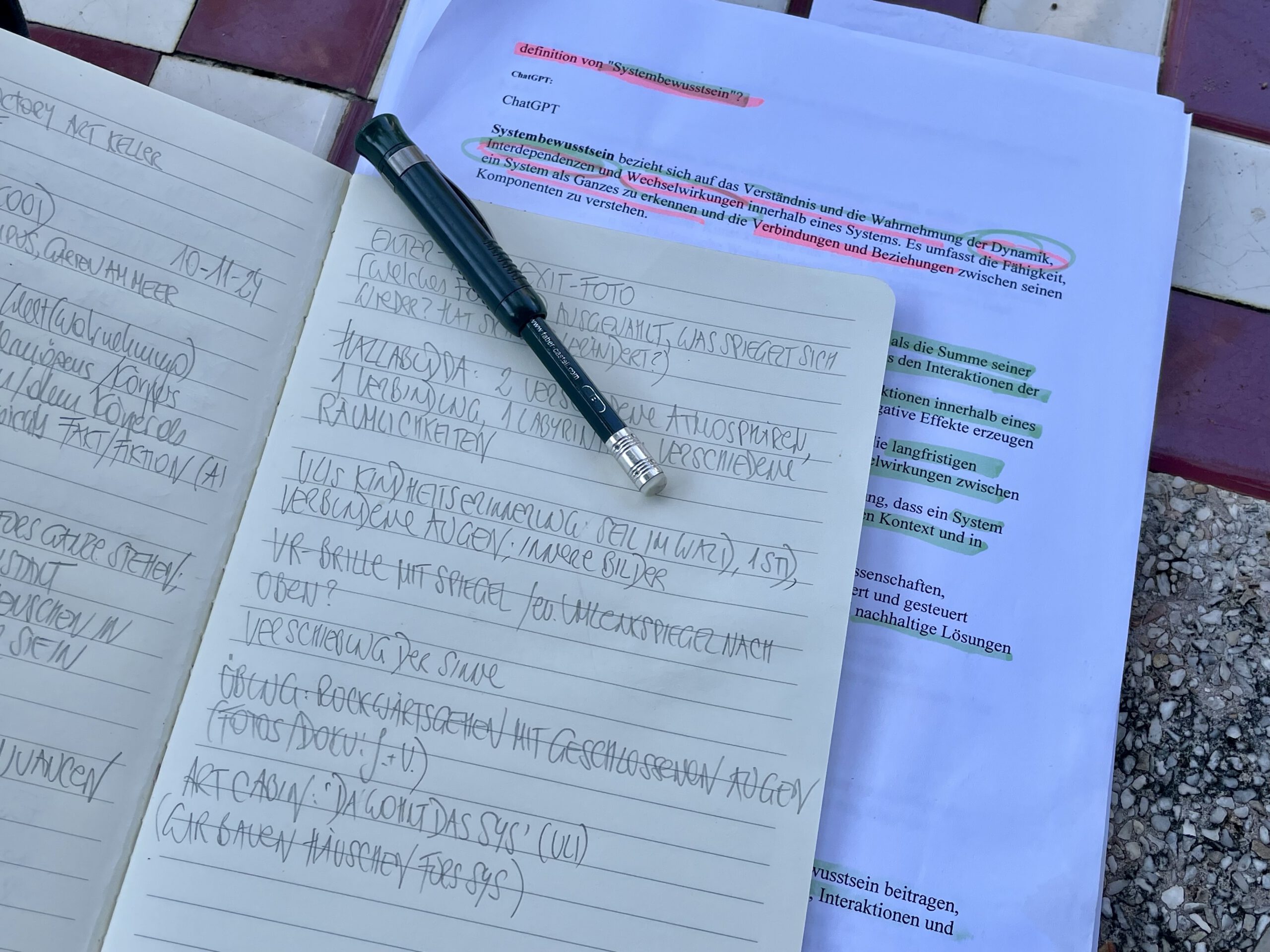
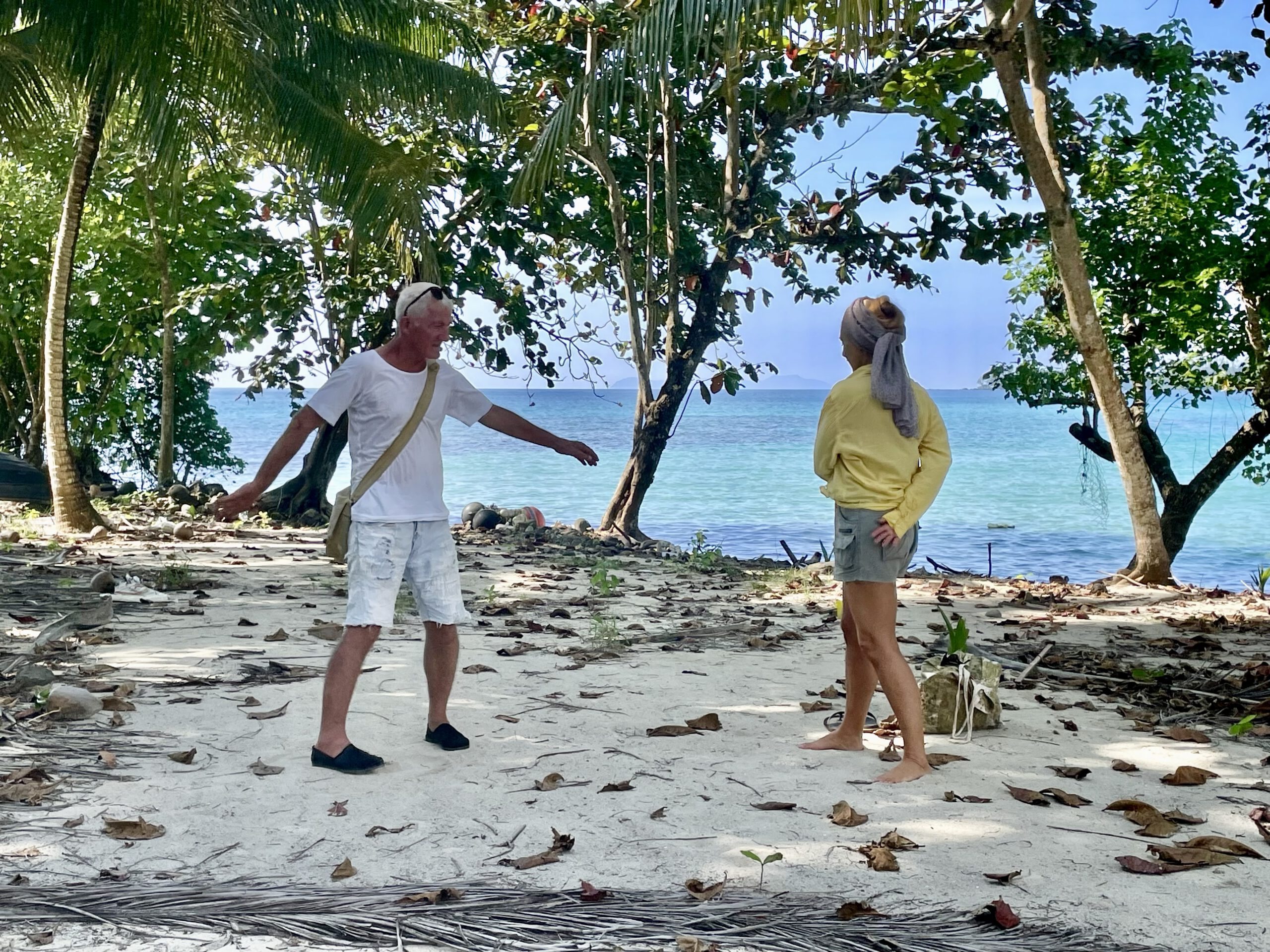
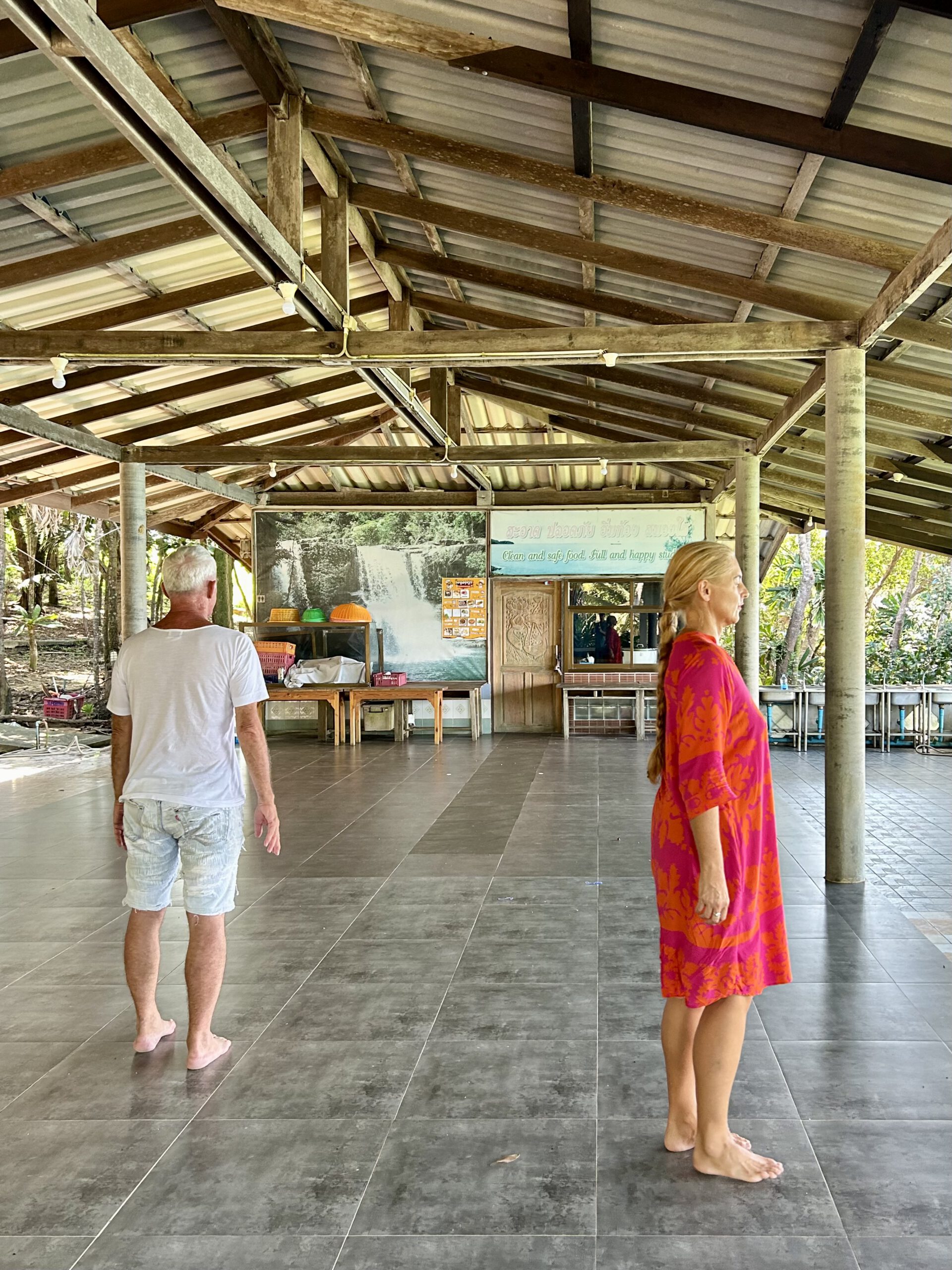
In November 2024, an unique Learning Studio took place on the island of Koh Kood. Artists and researchers Jeanette Müller, Paul Divjak, and Ulrich Gottlieb came together for an intensive period of exploration and experimentation. The goal: to develop new artistic methods for sensing and understanding living systems – focusing on the senses, the sensations of the body, and movement in different spaces.
Each day focused on a different theme. The group worked with guided meditations, movement sessions, and sensory experiments in nature. They explored how touch, sound, smell, rhythm, and space help us connect more deeply with our surroundings – and with ourselves as part of living systems.
One central idea that emerged was the figure of SŸS – a mythological, a mysterious being that feels and knows everything about connectedness and interactions – an embodiment of systems awareness. What would such a being feel like? How would it move, breathe, smell? The team created first sketches, gestures, and attributes for SŸS as inspiration for future installations and performances.
Insights into Learning Studio Days
The session began with a meeting on the terrace of the “base camp” for a shared update and welcome. The team reviewed the goals of the Learning Studio, clarified logistics, and exchanged prepared research materials – ranging from movement concepts and textual research to sensory materials such as fabrics and scent elements.
Day 2 took place on the school campus in Kho Kood and began with the olfactory interpretation of SŸS. The setting invited the group to translate systemic concepts and principles into performative movement sequences. This led to the development of scenographic ideas with a strong focus on resilience – reflected in systems, people, and the scenography itself.
Day 3 started with Vipassana meditation (meaning “insight” or “to see things as they really are,” is an ancient Indian mindfulness technique derived from the Buddha’s teachings. It is a non-sectarian practice that focuses on self-observation to purify the mind by observing physical sensations and mental phenomena without judgment or reaction), a practice that runs through the entire project. Exploratory walks through jungle paths, local villages, temples, and waterfalls sparked insights – turning observation into project-relevant reflection.
Day 4 centered on the sounds of nature in Koh Kood. The group made sound recordings, reflected on bamboo as both material and metaphor, and conducted movement studies inspired by SŸS. These impressions were translated into scenographic concepts and spatial compositions.
On Day 5, a sound workshop (“Sensing the Sound”) was held with students from Klong Chao School. It provided valuable insights into how sensory elements are perceived across cultural backgrounds – and how shared language becomes less essential in sensory-based communication. After further excursions and multiple Chi Gong and Tai Chi sessions, the day closed with a group discussion on gravity and reduction.
Day 6 served as a final reflection on the Learning Studio experience. The team reviewed key insights and tested scenographic elements developed throughout the week.
November 2024 – Kho Kood, Thailand
LEARNING STUDIOS
As part of SENSING LIVING SYSTEMS, the learning studios bring together various artists and scientists with their diverse expertise, experiences and perspectives. In confidential and relaxed atmospheres, they exchange questions and ideas and develop sensory approaches, workshop concepts, and acoustic, olfactory and haptic artworks to create multisensory scenographies for systems awareness.
In the Learning Studios, sensory and body-oriented practices encourage participants to develop and test scenographic and performative elements that make an understanding of living systems physically and emotionally tangible. The Learning Studios take place in a variety of settings – from urban spaces to remote natural landscapes, often in close collaboration with local communities and external experts.
These are collaborative, respectful and practice-oriented spaces, based on the conviction that knowledge and new insights grow through diversity and dialogue, sensual experience and the exchange of perceptions and thoughts.