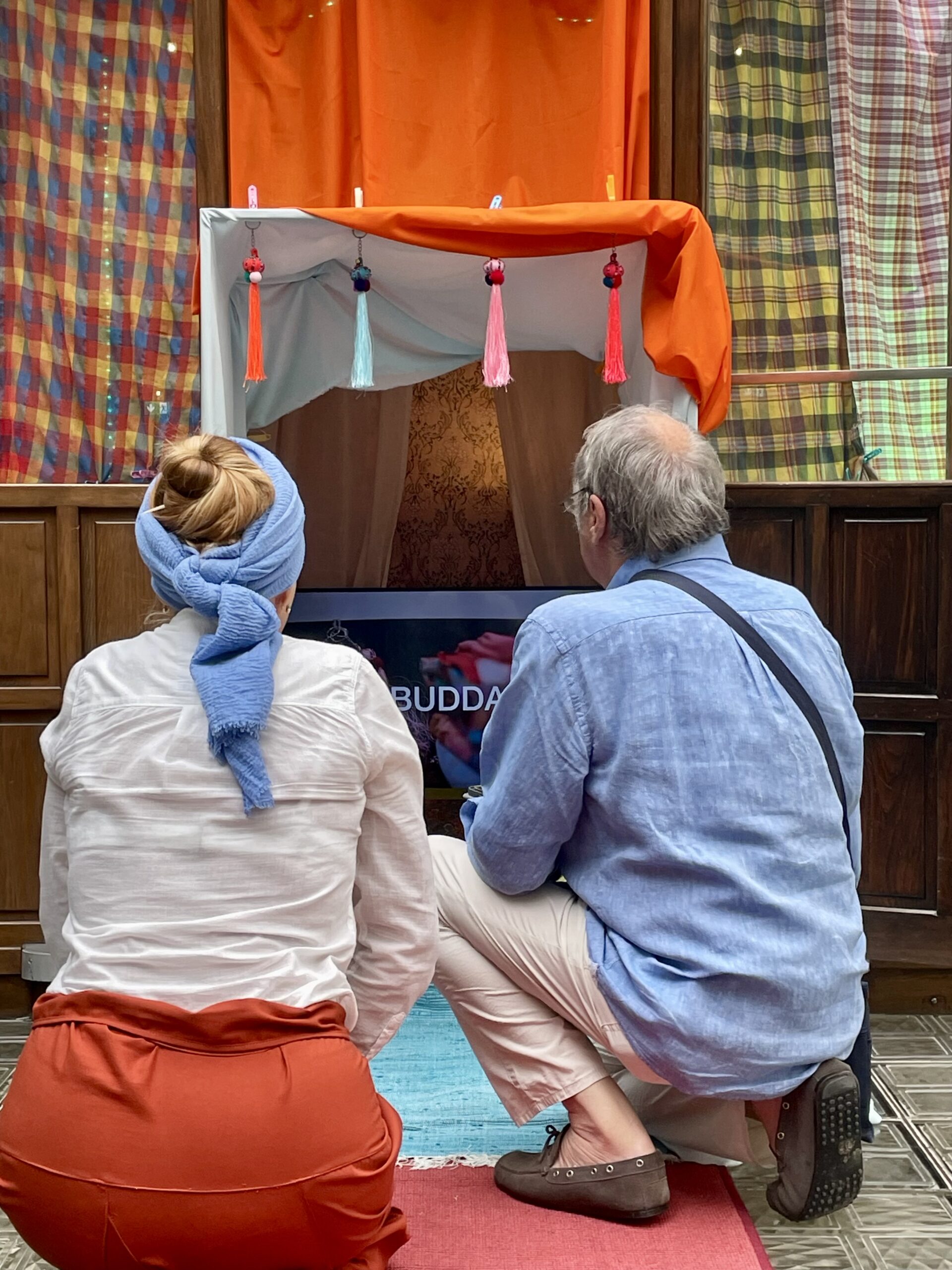
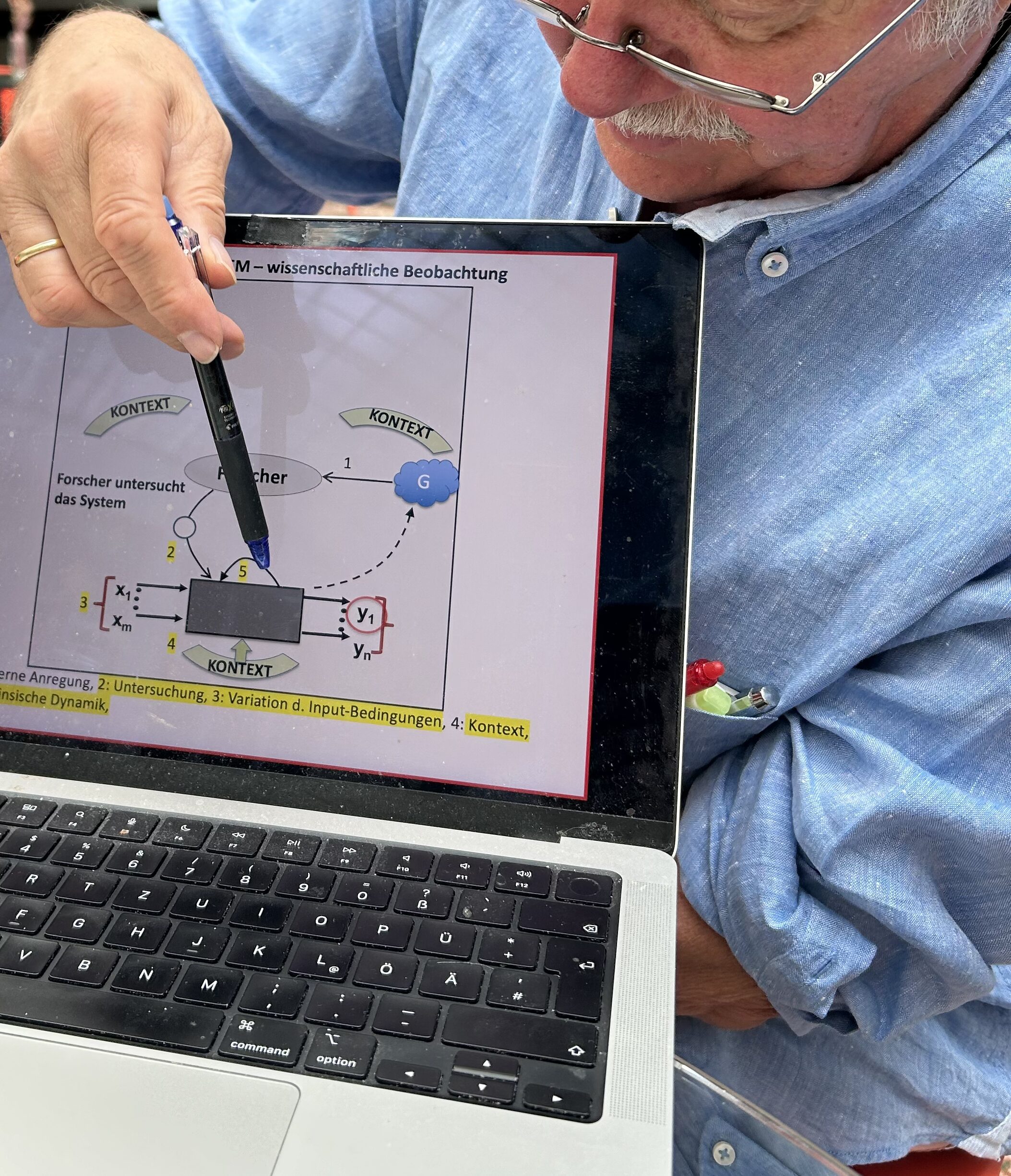
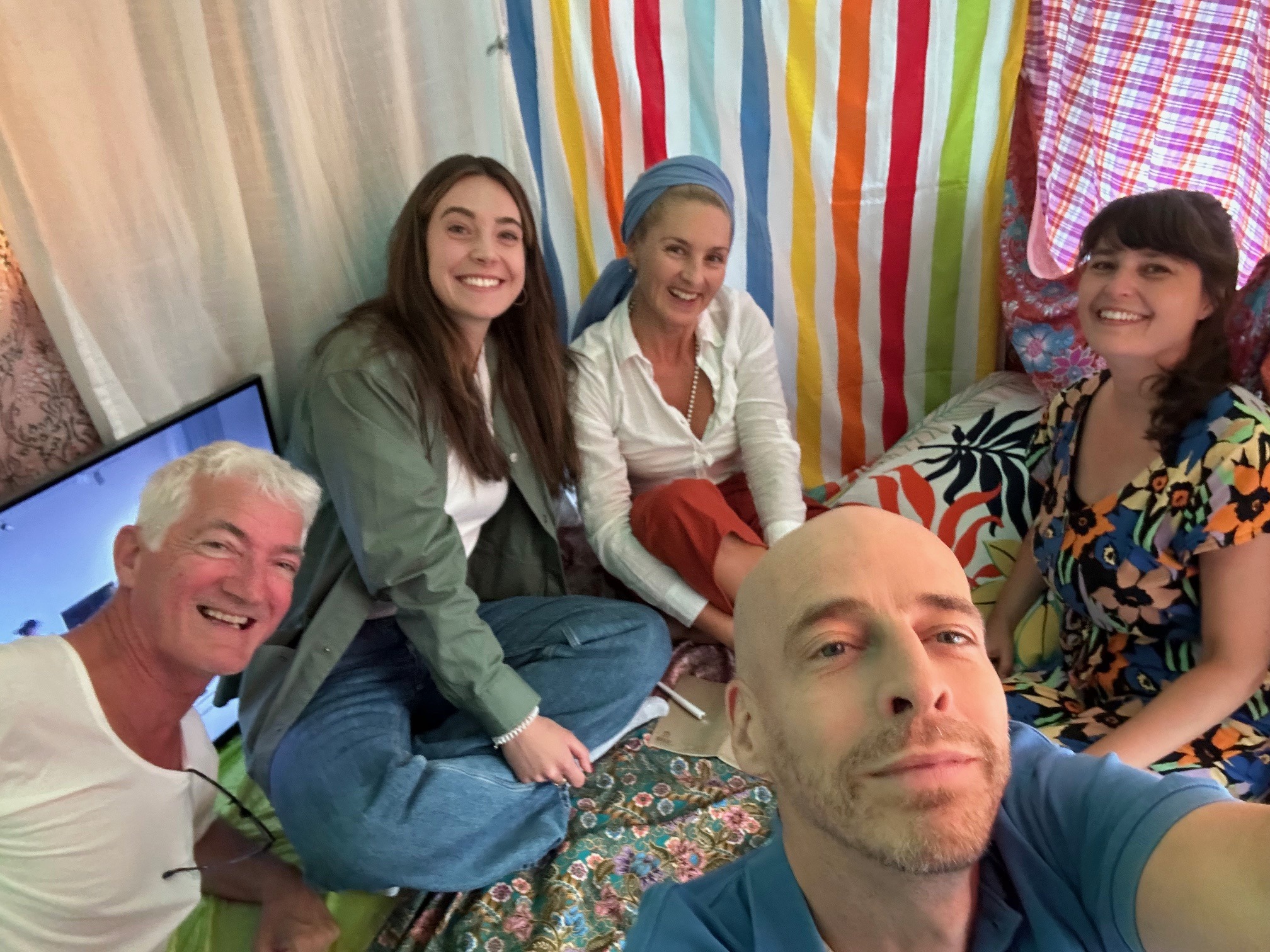
In course of the installation HALLABUDDA REENACTMENT, a Learning Studio was held in Summer 2024 at the Hallabudda space with Alexandra Graupner, Anna-Maria Irgang, Felix Tretter, Ulrich Gottlieb and MUELLER-DIVJAK. As medical doctor, psychiatrist, and systems scientist, Felix Tretter shared his expertise on how sensory stimuli influence the individual neural system. Drawing from his interdisciplinary background, he further explained the participants how such sensory inputs shape our awareness and understanding of the various environments we inhabit. The Learning Studio in the Hallabudda also highlighted performative, embodied studies. With performing artist Ulrich Gottlieb, performative experiments were explored and reflected upon within the Hallabudda setting.
This exchange gave further shape to the idea behind SŸS – a being endowed with systemic wisdom. Attributes and movements of this imagined creature were refined together, offering inspiration and conceptual seeds for future installations and activities.
The intimate conversation setting within the Hallabudda – a closed, safe space – allowed participants to directly experience and reflect on the concepts discussed, making the content tangible and embodied.
Summer 2024 – AIL Art Cabin, University of Applied Arts Vienna
LEARNING STUDIOS
As part of SENSING LIVING SYSTEMS, the learning studios bring together various artists and scientists with their diverse expertise, experiences and perspectives. In confidential and relaxed atmospheres, they exchange questions and ideas and develop sensory approaches, workshop concepts, and acoustic, olfactory and haptic artworks to create multisensory scenographies for systems awareness.
In the Learning Studios, sensory and body-oriented practices encourage participants to develop and test scenographic and performative elements that make an understanding of living systems physically and emotionally tangible. The Learning Studios take place in a variety of settings – from urban spaces to remote natural landscapes, often in close collaboration with local communities and external experts.
These are collaborative, respectful and practice-oriented spaces, based on the conviction that knowledge and new insights grow through diversity and dialogue, sensual experience and the exchange of perceptions and thoughts.