How can we broaden our thinking and sensing outside the box (“beyond the edge of a plate”, beyond immediate horizons)? Where do we draw the boundaries of our imagination of systems?
Participatory observations, extensive literature research, expert interviews, and in-depth conversations with members of our Advisory Board led us to the assumption and realization that extending the boundaries of empathy significantly impacts the perception and activity of living systems. Empathy arises, among other things, through mirror neurons, which are activated when we see someone, for example, getting hurt. Auditory stimuli, specific sounds, frequencies, and melodies also trigger different emotions and sometimes memories, allowing us to transcend the boundaries of our current perception.
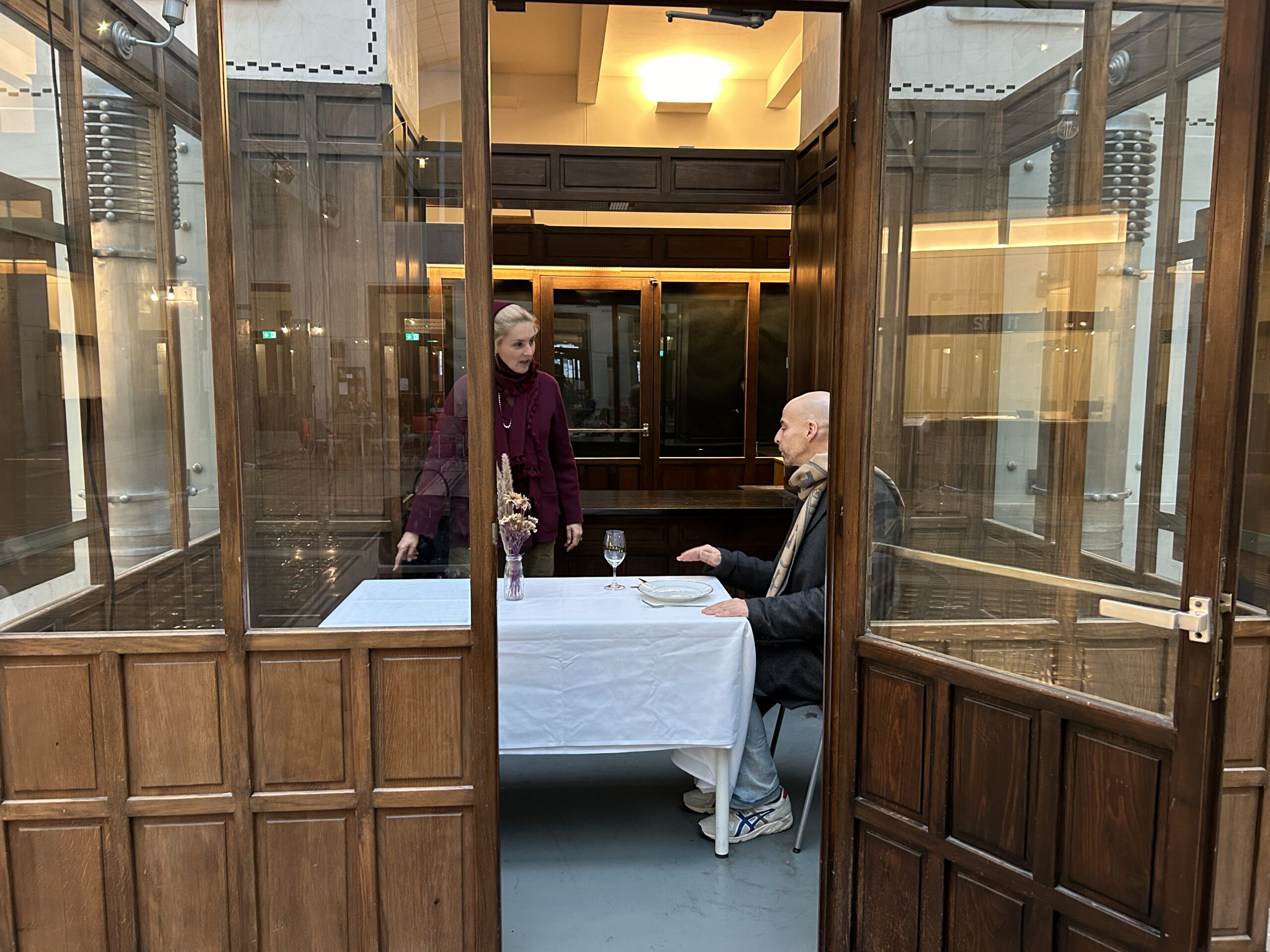
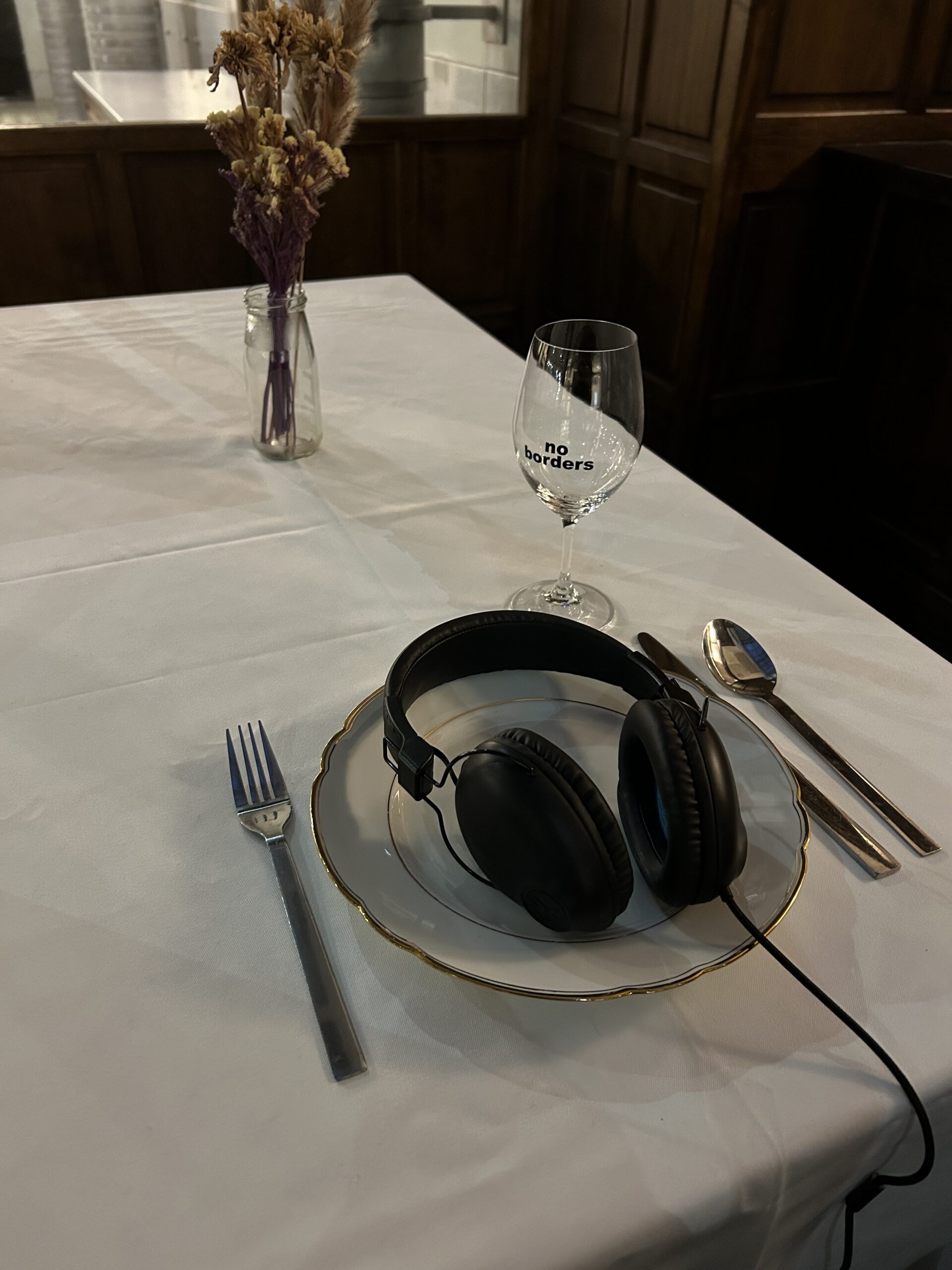
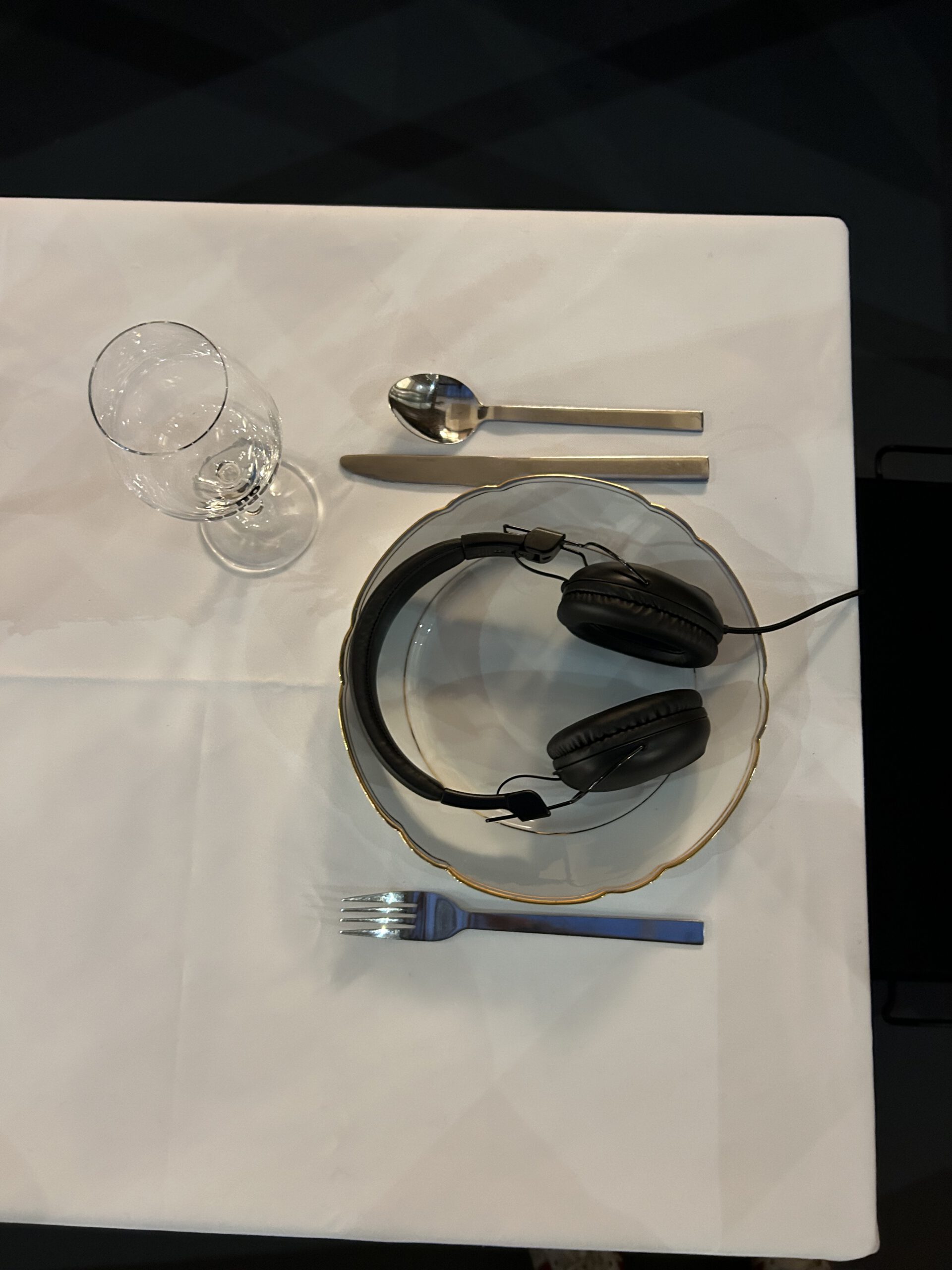
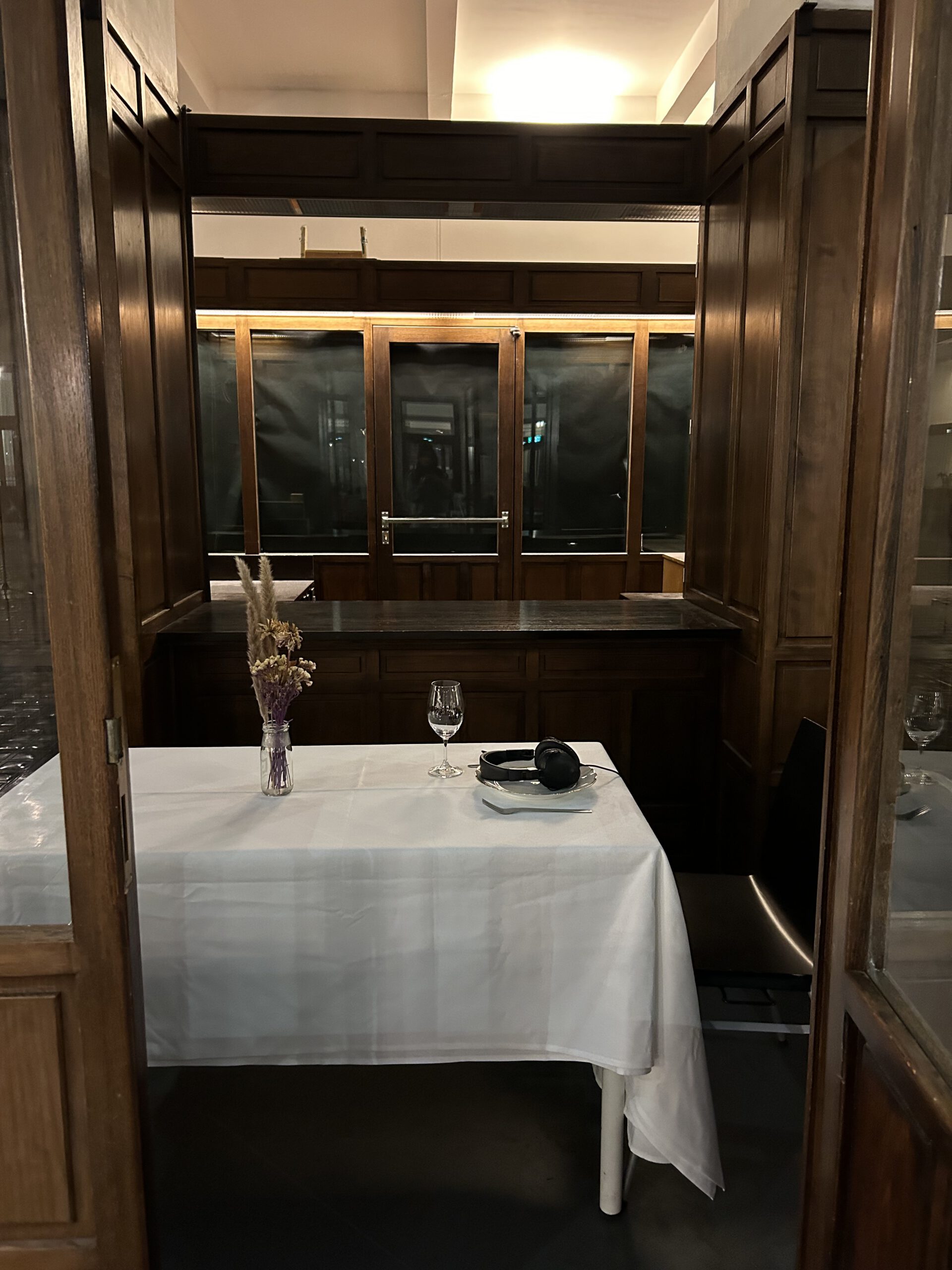
The second scenographic installation is a reenactment of The Table / What If It Was All A Dream by composer and sound artist Tuntun Taratawan Krue-On. A single chair, a table set, and a plate holding a pair of headphones recreate the setting from the artist’s original video work. The soundscape – heard through the headphones – merges field recordings from her rural childhood garden in Thailand with ambient sounds from the London Underground, captured during her studies at Goldsmiths University. This was a time marked by pandemic-related restrictions and intense homesickness, which Krue-On translated into a moving auditory collage of longing and connection.
We relocated this intimate scene to the AIL Art Cabin (where also the link to the original video was posted), and following questions arose: Where and in which systemsdo we feel at home? Where and when do we feel fully present, alive, and capable of action?How does sound affect our ability to empathize?
Visitors noted that the installation shifted their perception of boundaries – between past and present, focus and distraction, memory and imagination. The interplay of sound and engagement with the surroundings supported embodied reflection and invited a deeper awareness of how internal and external systems influence each other.
February – June 2024 – AIL Art Cabin, Angewandte Interdisciplinary Lab, University of Applied Arts Vienna
Sound credits: Tuntun Taratawan Krue-On
Series of Scenographic Studies
The Series of Scenographic Studies is a key format within SENSING LIVING SYSTEMS. It merges artistic research activities and systems science knowledge in participatory, multisensory installations. Each study explores how systems principles become tangible through scent, sound, touch, and space.
The installations, shown at the AIL Art Cabin (University of Applied Arts Vienna, Georg-Coch-Platz 2, 1010 Vienna), offer insights into the project’s research practices and questions, and simultaneously generate new ones: visitors are not only observers but active contributors. Through their interaction, they help shape both the experience and the research process. The installations change about every 3 to 4 months. Designed as experimental environments, the scenographic studies transform key system principles and project’s findings into multisensory experience.