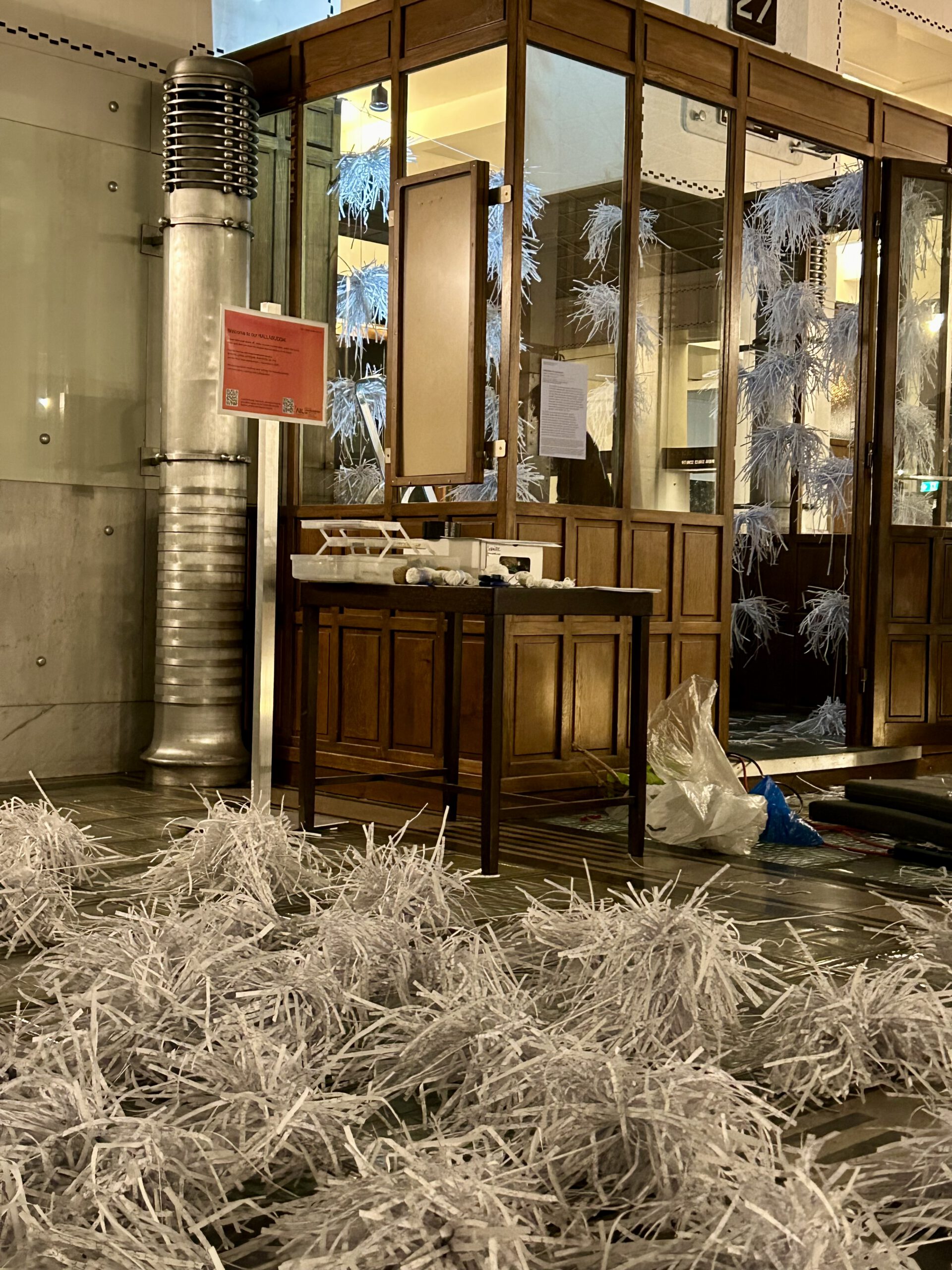
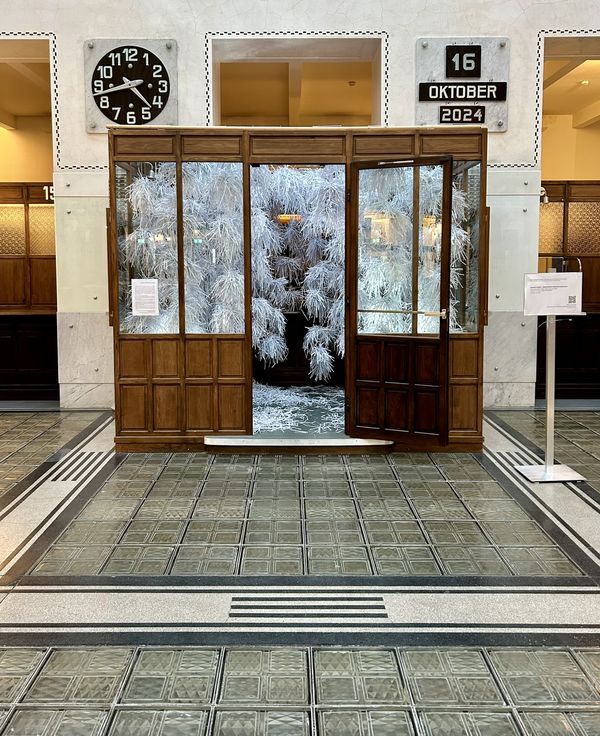
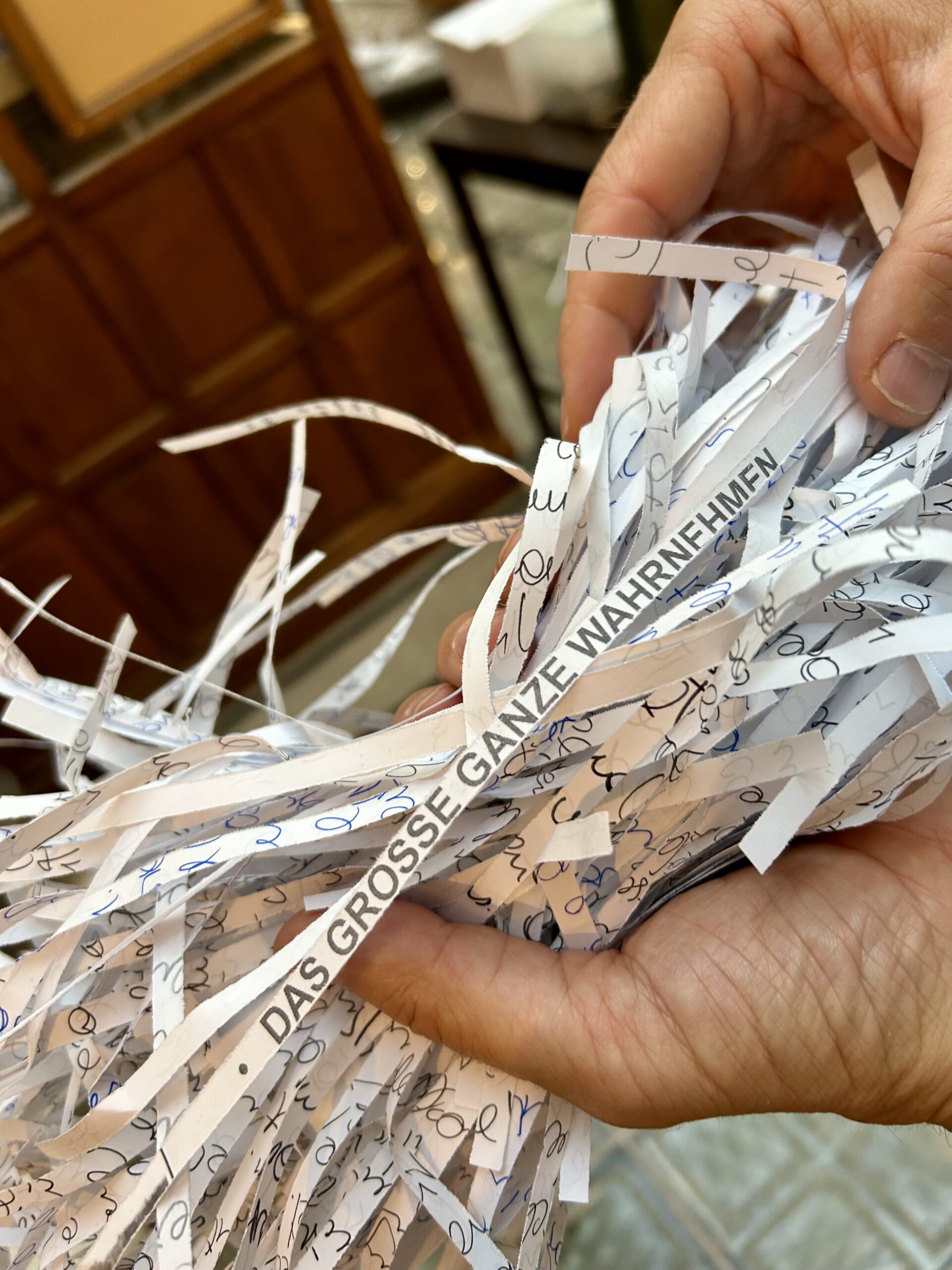
How does cognitive overload feel? What happens when information and insights become too overwhelming to process and integrate as useful knowledge? In our fourth scenographic study, systems theory is not read, but physically experienced. In SENSING THEORY – Shredding Cognitive Overload, thousands of pages from scientific and artistic texts were shredded and turned into a soft landscape of paper. Visitors could walk through the material, touch it, wade through it, and feel the weight – and release – of information overload. The space became a physical version of information overload.
A sound installation accompanied the space with voice recordings of Ludwig von Bertalanffy reading his texts related to General Systems Theory. As visitors moved through the shredded material, they were surrounded by his thoughts on systems theory – not just as written knowledge, but as an acoustic and physical experience.
This part of the Series of Scenographic Studies was created in collaboration with the Bertalanffy Center for Systems Science (BCSSS). The space was built with the help of Taras Komisaruk and Michael Ellinger. Visitors shared how the installation helped them connect to complex ideas in a new way- playful, simple, and surprising. Many posted about it on social media, helping more people discover the SENSING LIVING SYSTEMS project. The installation asked: What do we have to unlearn? What do we have to let go of, to make wise, prosperous decisions?
October 2024 – January 2025 – AIL Art Cabin, Angewandte Interdisciplinary Lab – University of Applied Arts Vienna, 2024
The Series of Scenographic Studies is a key format within SENSING LIVING SYSTEMS. It merges artistic research activities and systems science knowledge in participatory, multisensory installations. Each study explores how systems principles become tangible through scent, sound, touch, and space.
The installations, shown at the AIL Art Cabin (University of Applied Arts Vienna, Georg-Coch-Platz 2, 1010 Vienna), offer insights into the project’s research practices and questions, and simultaneously generate new ones: visitors are not only observers but active contributors. Through their interaction, they help shape both the experience and the research process. The installations change about every 3 to 4 months. Designed as experimental environments, the scenographic studies transform key system principles and project’s findings into multisensory experience.