
SΫS DANCE
Series of Scenographic Studies / Part VI
How do living systems dance? Do their movements follow a particular rhythm?
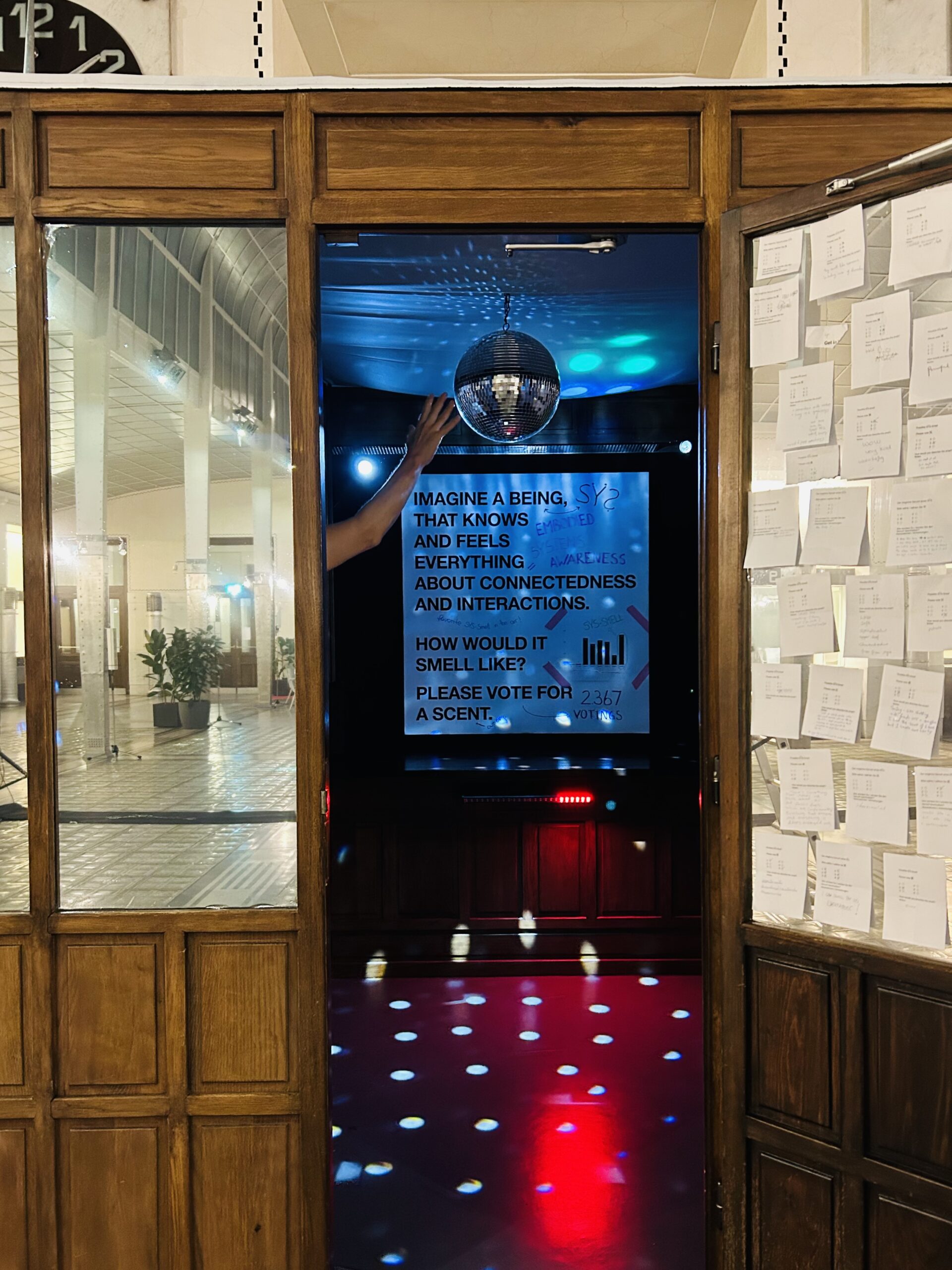
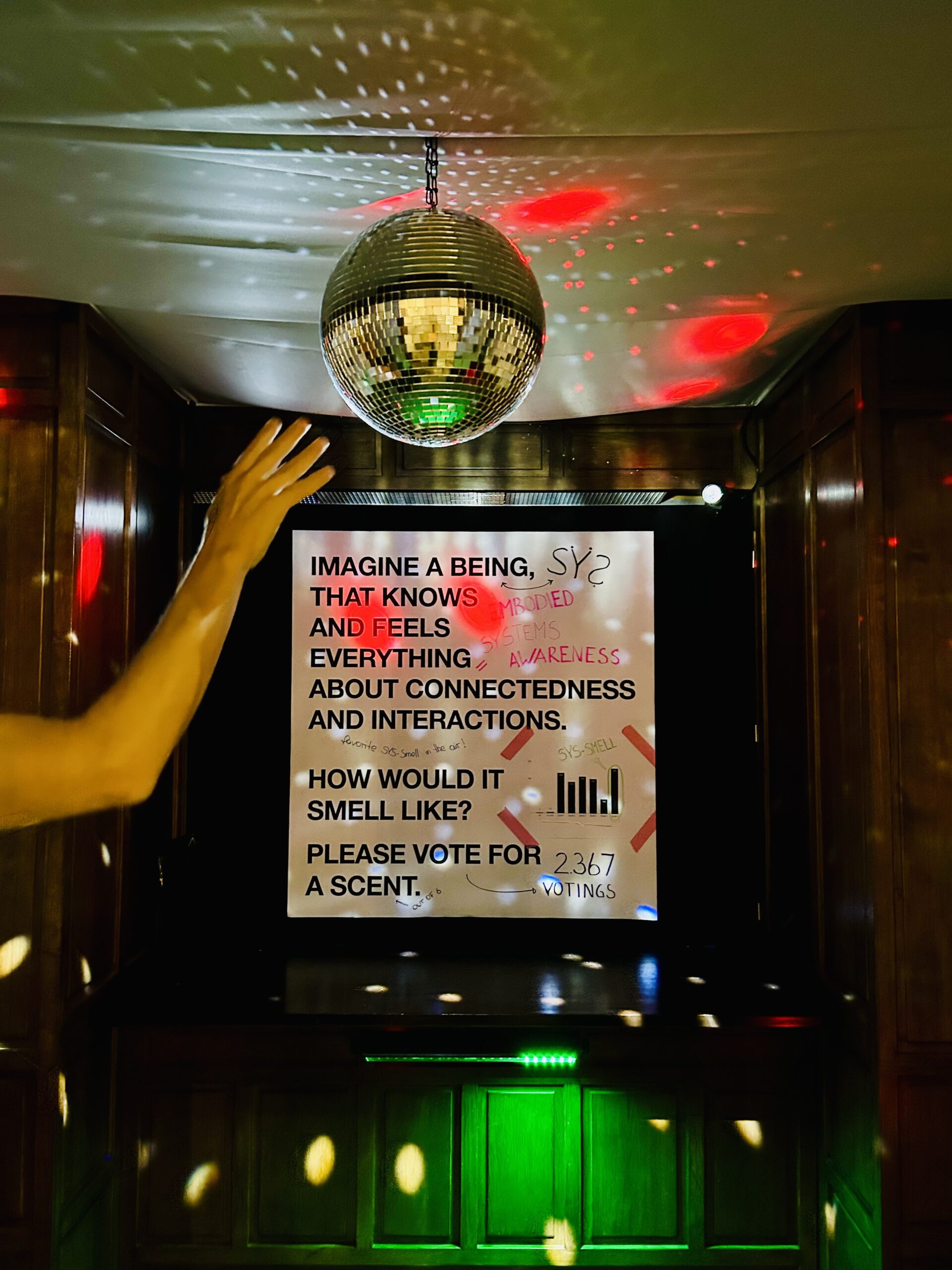
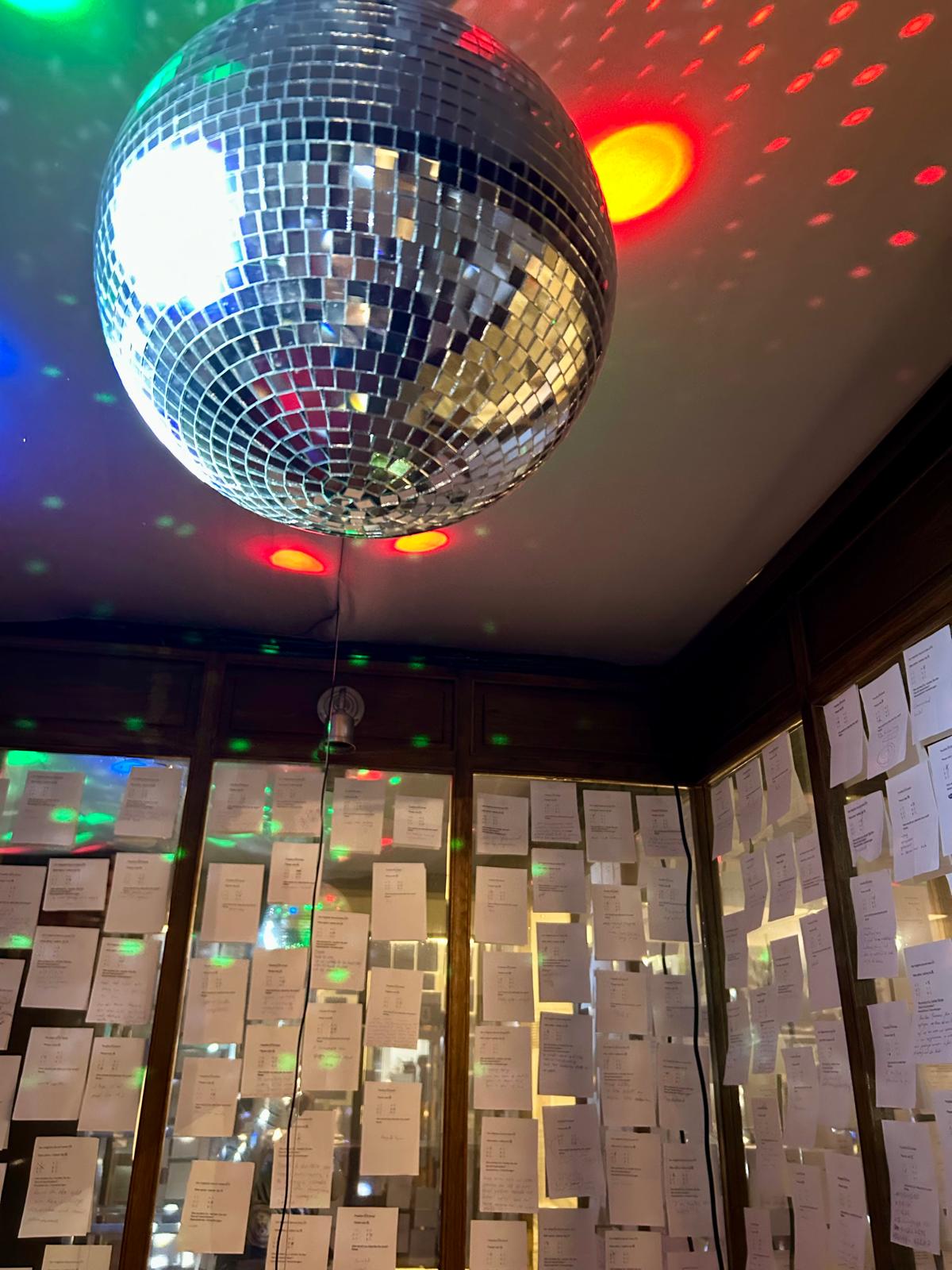
In Part VI of the Series of Scenographic Studies, the being we call SΫS came to life on the dance floor. Let’s dance!
This installation builds directly on the previous part, CONCEPTION OF SŸS – The Smell of a Mythological Being, where over 2,300 votes from all around the world were collected. Voters were invited to imagine the odeur of a being that knows and feels everything about connectedness and interaction and choose the scent that best reflects this.
The main voting booth was presented in the Art Cabin at the Angewandte Interdisciplinary Lab. Mini-versions of the installation – in the form of scent-voting stations – were also shown at various international events and conferences, such as the SAR Artistic Research Conference in Porto, the Systems Awareness Lab Conference at MIT in Boston, and at the Austrian Embassy in Bangkok. These decentralized interventions allowed people from different cultures and contexts to participate in shaping the identity of SΫS through their sensory choices.
With SΫS DANCE the chosen scent from the previous votings filled the Art Cabin and drew a sensory shape of SΫS. Accompanied by custom-created tracks based on findings and poetic fragments from our research, the space invited visitors to move, to dance, to breathe, and connect with the imagined being and what it stands for – deep sense-ability and knowledge about interconnectedness, interactions, interdependencies, – and the beauty and joy of life itself.
Informed by the latest advancements in generative AI, the sound artist collective of the SENSING LIVING SYSTEMS-team meticulously experiments with the dynamic interplay between human and the machine, interrogating (co)agency, and expanding arts-based research.
Whether it’s a single sentence dropped during a Systems Awareness-Conference at MIT or the poetic interpretation of theories and findings: the lyrics of the different tracks, presenting research as House and Electroclash artifacts in a staged mini club, are taking up the notion of an emerging SΫS, exploring spaces of (co)existence.
SΫS DANCE was not just a scenographic installation. It was a celebration of the systems scientist Donella Meadows – and of all the interconnections that shape us, an open invitation to explore how we relate to the systems we’re part of. Get yourself connected! Or, to quote Meadows, whose work has had a profound influence on us: “We can’t control systems or figure them out. But we can dance with them!”
June – October 2025 – AIL Art Cabin, Angewandte Interdisciplinary Lab, University of Applied Arts Vienna
Sound credits: The Living Systems – SLS Sound Collective
Series of Scenographic Studies
The Series of Scenographic Studies is a key format within SENSING LIVING SYSTEMS. It merges artistic research activities and systems science knowledge in participatory, multisensory installations. Each study explores how systems principles become tangible through scent, sound, touch, and space.
The installations, shown at the AIL Art Cabin (University of Applied Arts Vienna, Georg-Coch-Platz 2, 1010 Vienna), offer insights into the project’s research practices and questions, and simultaneously generate new ones: visitors are not only observers but active contributors. Through their interaction, they help shape both the experience and the research process. The installations change about every 3 to 4 months. Designed as experimental environments, the scenographic studies transform key system principles and project’s findings into multisensory experience.
SΫS has become a nickname for persons who develop an embodied consciousness of interdependencies, precious equilibria and fragile beauty of all life. In other words: SΫS characters evolve an embodied systems awareness. It is also an acronym and stands for Sense Your Senses – also to understand the systems that are relevant to one's own life – to Sense Your Systems.
SΫS SPACE is the SENSING LIVING SYSTEMS' multisensory scenography. The SΫS SPACE facilitates a physical experience of one's own embeddedness within living systems, within complex interrelationships – within a greater whole. It paves the way for relational sensing and thinking – the development of an embodied systems awareness, that can help in coping with complexity, challenges, and uncertainties, and in making good decisions towards sustainable futures. SΫS SPACE deliberately reduces the dominance of the sense of sight, placing the emphasis instead on smell, touch, and hearing.
SΫS SPACE is the SENSING LIVING SYSTEMS' multisensory scenography. The SΫS SPACE facilitates a physical experience of one's own embeddedness within living systems, within complex interrelationships – within a greater whole. It paves the way for relational sensing and thinking – the development of an embodied systems awareness, that can help in coping with complexity, challenges, and uncertainties, and in making good decisions towards sustainable futures. SΫS SPACE deliberately reduces the dominance of the sense of sight, placing the emphasis instead on smell, touch, and hearing.