Smell & Touch Sensations for New European Bauhaus in cooperation with the Innovative Education Center
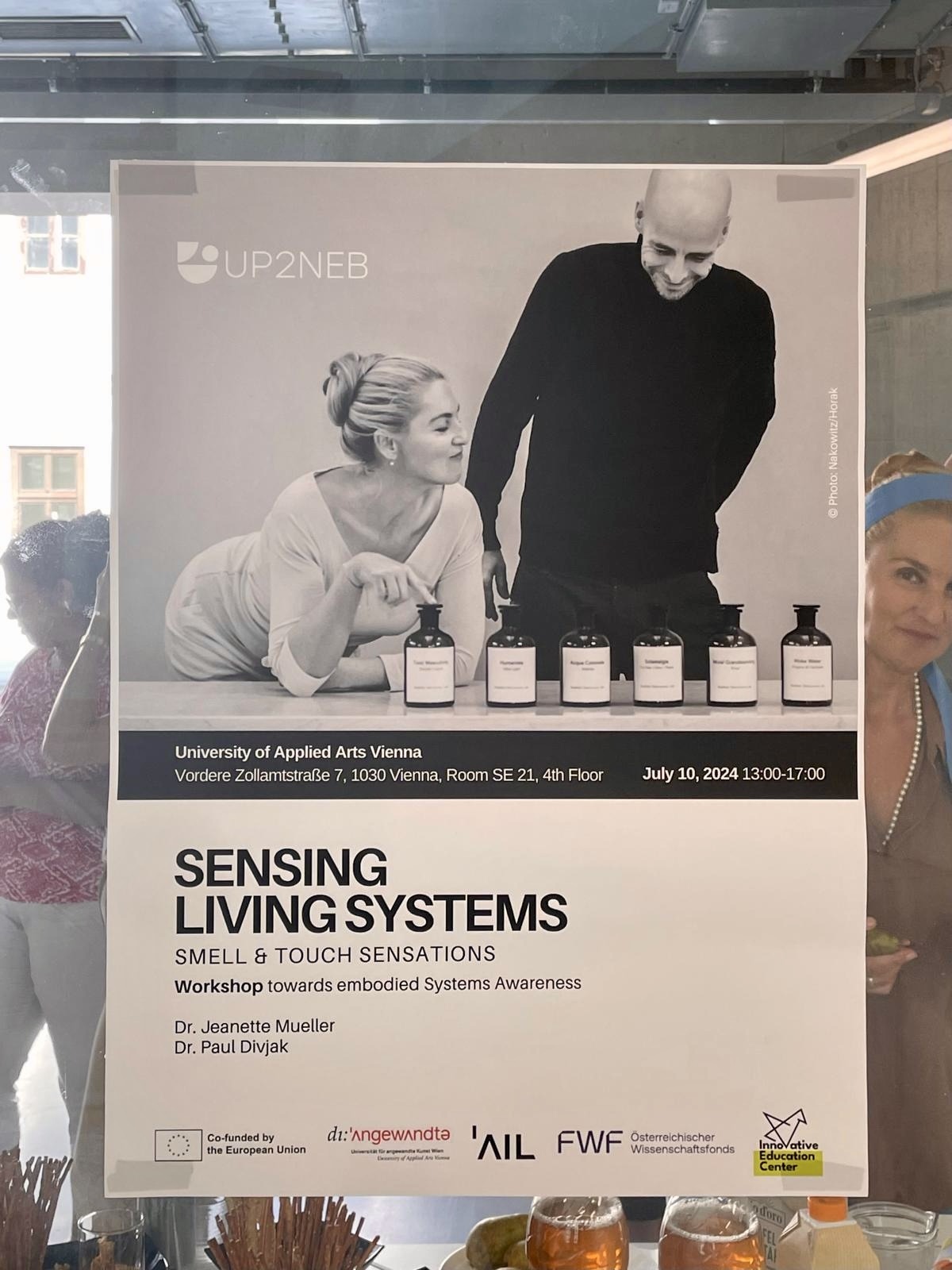
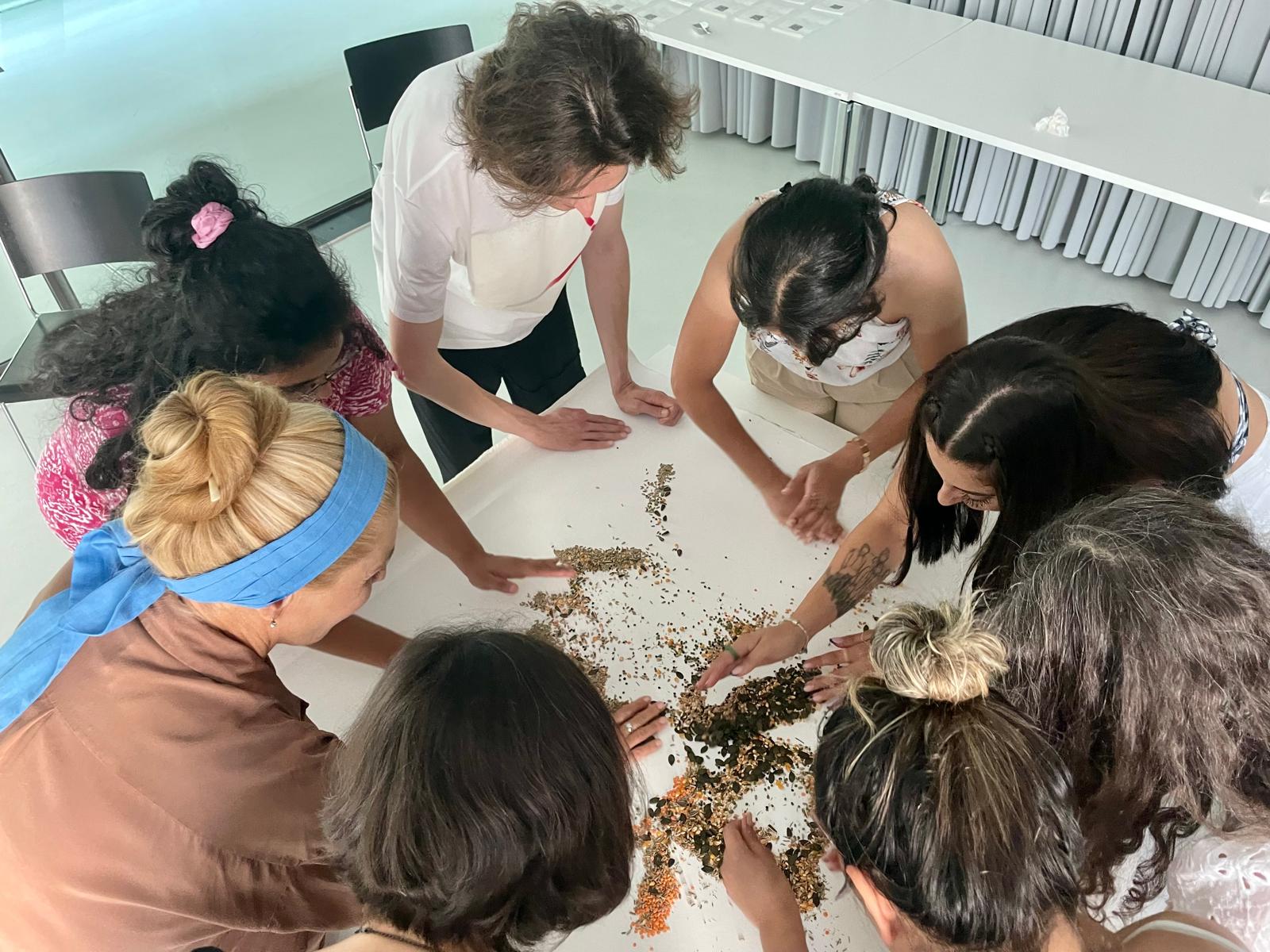
On July 10, 2024, a special Sensing Workshop was held at the University of Applied Arts Vienna, in collaboration with the Innovative Education Center for the New European Bauhaus. This Living Lab invited participants to explore how smells, textures, and sounds can deepen our awareness of living systems.
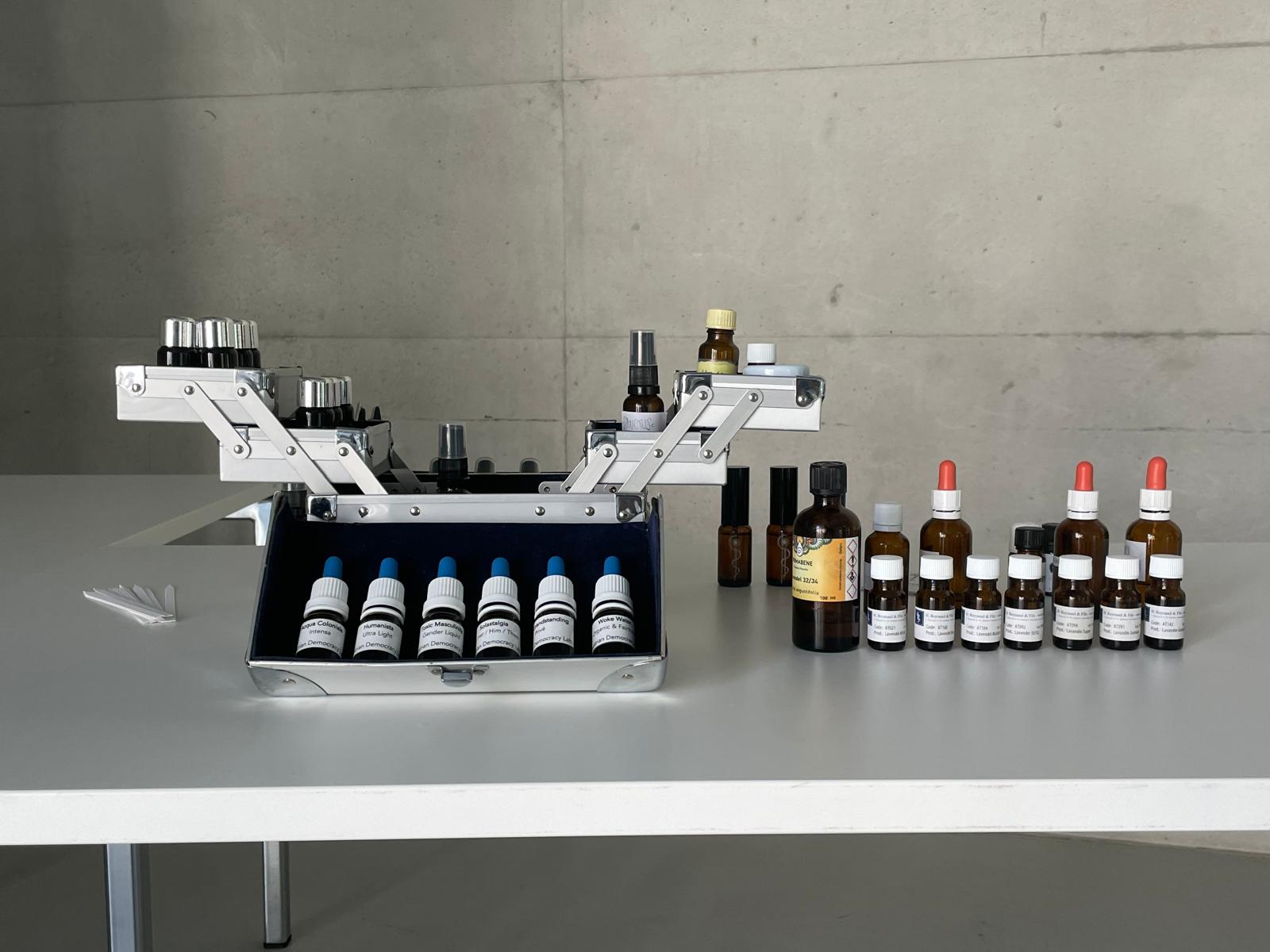
In a hands-on setting, participants engaged with multisensory elements – scents, tactile materials, and ambient soundscapes – designed by the artist duo MUELLER-DIVJAK. They were invited to slow down, sense carefully, and reflect on how these impressions connect to the larger systems they are part of.
The workshop helped the team test and refine scenographic elements for future installations. It showed how sensory experiences can shift our perspective towards systems awareness.
July 2024 – University of Applied Arts Vienna
SENSING WORKSHOPS
These sensory workshops, developed by MUELLER-DIVJAK, invite participants of all ages to experience relational thinking and systemic awareness through smell, touch and sound.
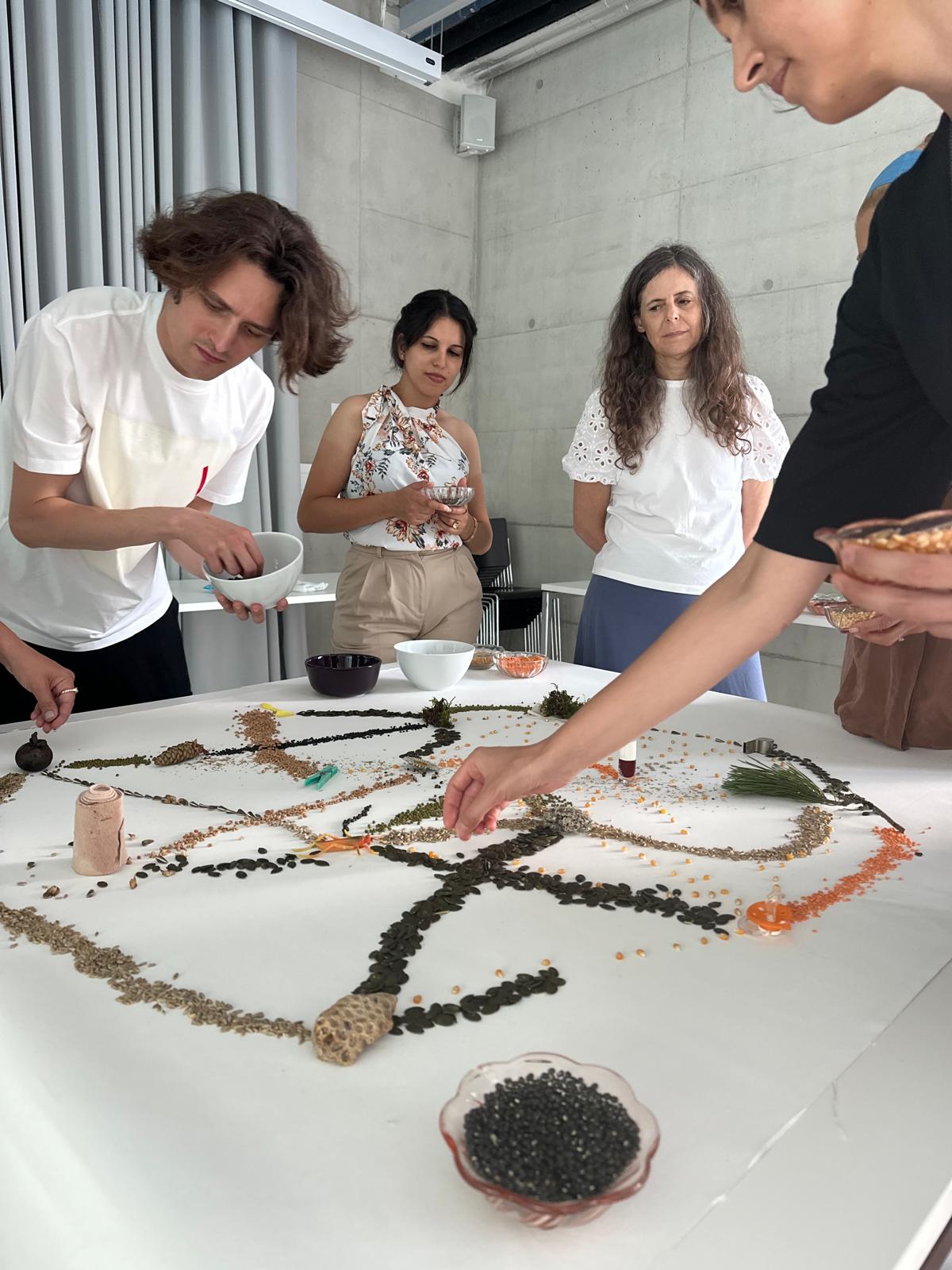
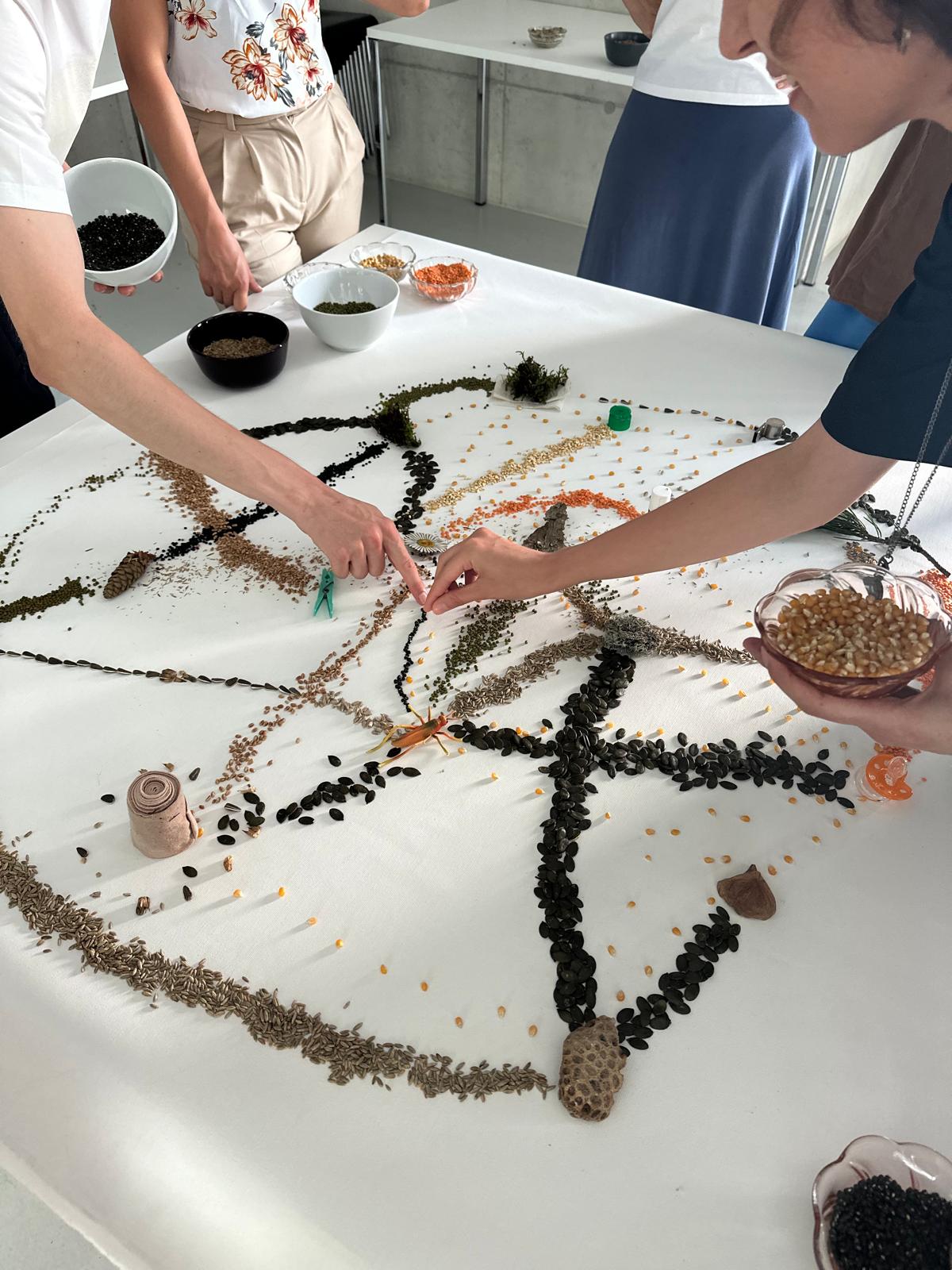
At interactive stations, participants explore, for example, natural and artificial materials as well as art works with their eyes closed; follow scents and sounds specially created by the artist duo MUELLER-DIVJAK (Jeanette Mueller and Paul Divjak) to stimulate the imagination or unlock emotional pathways; or use seeds to visualize connections within everyday systems. Each workshop opens up space for reflection: How can we perceive our interconnectedness and, through this, our mutual interdependence and embeddedness? How do we influence (living) systems? And how can we cope with all the influences that we are exposed to?
These inclusive and playful workshops have already been implemented with various age groups and cultures – from school classes and universities in Austria and Southeast Asia to adult learners in European research contexts and ASEAN art scenes. Rather than imparting facts, they invite physical exploration and offer a sensory approach to complexity, towards an embodied awareness of living systems.